

Semi Trailer
A semi-trailer is a trailer without a front axle. The combination of a semi-trailer and a tractor truck is called a semi-trailer truck (also known simply as a "semi-trailer", "tractor trailer", or "semi" in the United States). A large proportion of a semi-trailer's weight is supported by a tractor unit, or a detachable front-axle assembly known as a dolly, or the tail of another trailer. The semi-trailer's weight is semi-supported (half-supported) by its own wheels, at the rear of the semi-trailer. A semi-trailer is normally equipped with landing gear (legs which can be lowered) to support it when it is uncoupled. Many semi-trailers have wheels that are capable of being totally dismounted and are also relocatable (repositionable) to better distribute load to bearing wheel weight factors. Semi-trailers are more popular for transport than full trailers, which have both front and rear axles. Ease of backing is cited as one of the semi's chief advantages.
Advantages of Semi Trailer
Weatherproof
Semi-trailers are designed to be windproof and weatherproof. They can protect the goods from extreme weather conditions like heavy rainfall, sunlight or storm. No matter how long you need to store your goods, you can sit relaxed, knowing they are safe in a semi-trailer.
Secure
When you choose semi-trailers for storage, you don’ t need to worry about thieves. Semi-trailers are durable and rugged, and they have an advanced locking system. So, you can rest assured that your goods are secure.
Convenient
Either you can park the semi-trailer in a secure lot or at your facility. In addition, storage is quicker and easier to access with semi-trailers. Therefore, semi-trailers are a convenient and easily accessible option for storing goods in semi-trailers.
Easy to move
It is easy to load, unload, and move goods with semi-trailers. You can easily relocate the semi-trailer even if it is fully loaded with the help of a semi-truck.
-
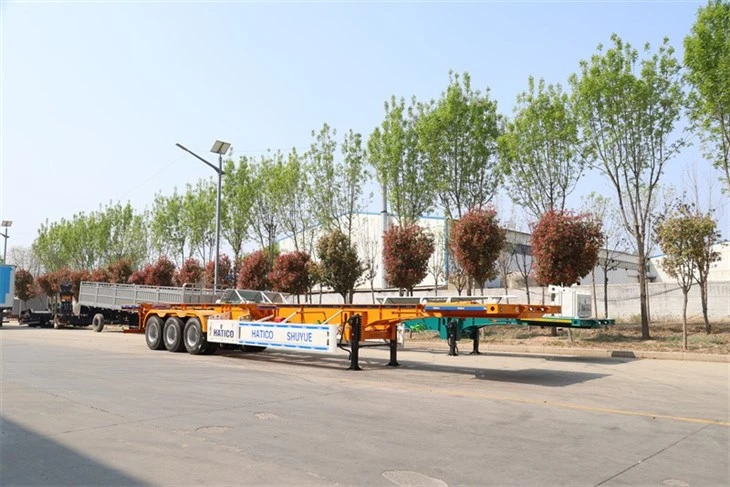
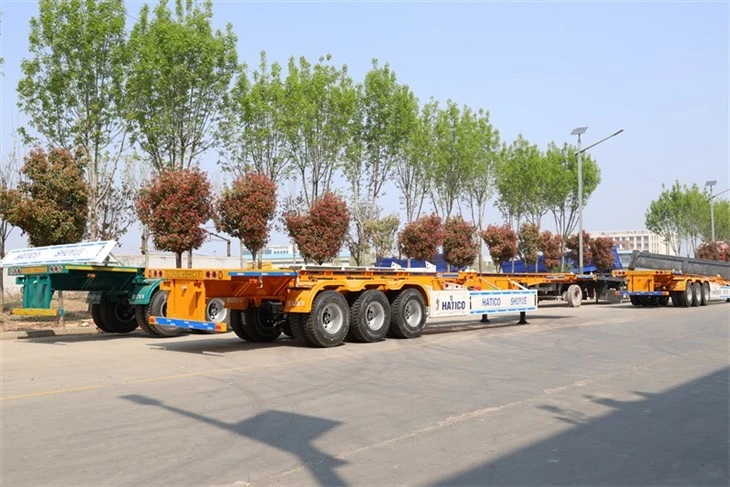
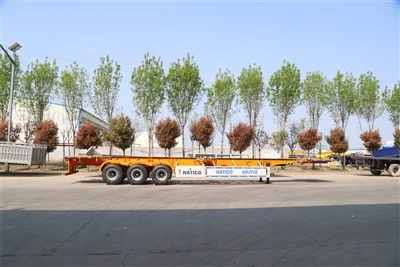 Skeleton Transport Semi-trailerContainer skeleton vehicle, commonly known as skeleton vehicle, is a specialized vehicle used for transporting containers. Its loading position is the chassis framework without a cargo platform, andAdd to Inquiry
Why Choose Us
Our factory
Located at the foot of the world-renowned Shuibo Liangshan Mountain, the section of National Highway 220 from Jinan to Zhengzhou is a prime location. Our company is a comprehensive production enterprise that integrates processing, manufacturing, and installation. We have strong mechanical processing capabilities, strong technical strength, and complete testing methods.
Our product
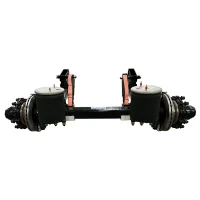
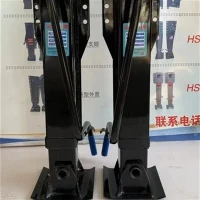
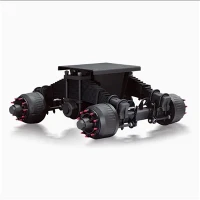
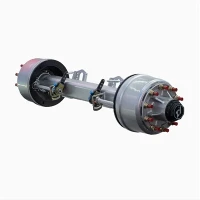
Special vehicle accessories such as disc brake axle, drum brake axle, air suspension, mechanical suspension, semi-trailer support leg, traction pin, air storage cylinder, etc.
Production equipment
Xiang Hengmai CNC sawing machine, hydraulic gate type shearing machine, screw compressor, frozen compressed air dryer, open fixed table press, Xuzhou pressure machinery hydraulic press, four column hydraulic press, suspension double gun automatic welding machine, shot blasting cleaning equipment, centrifugal ventilation fan, 2 sets of Dehong environmental protection spraying equipment, 15 sets of secondary protection welding machines, and 1 set of environmental protection centralized welding smoke purification treatment equipment.
Our service
We adhere to the policy of implementing customer needs and expectations, carrying out customer satisfaction work, implementing the goal of quality first, controlling product production and market, timely communicating with customers in case of after-sales issues, and providing solutions.
A Complete Guide to the Different Types of Semi Trailers
Flatbed trailers
Flatbed trailers are some of the most common semi trailers that you'll see on the road because of their versatility. They can hold a maximum of 21,000 kg and can be a maximum of 16 metres long and 2.5 metres across. They often carry flat steel and coiled steel but due to their size and versatility, they can be used to carry a variety of products that don't need to be enclosed and protected from the weather or climate. They also have an easier loading and unloading process due to the fact that they're completely accessible on the top and on all sides. Securing cargo should be prioritised since there isn't the protection of an enclosure to hold shifting items. Driving may also prove to be more difficult because these trailers are typically holding extremely heavy cargo.
Drop deck trailer
Drop deck trailers are a specific kind of flatbed trailer. They are completely open to the elements and also contain two different levels. They're often used to load large industrial or farm equipment, but they can also be used for general freight as well as hay and cotton bales. They often come with a hydraulic rear ramp to make loading and unloading easier.
Drop deck wideners
Drop deck wideners are also available. These come with two different levels where the top level is fixed and the bottom level is low to the ground. With drop deck wideners, the lower deck can widen depending on the width of the load. This is great for any kind of oversized industrial equipment. The decks can widen to up to four metres and they often come with single, bi-fold, or heavy-duty ramps to make loading equipment easier.
Low loader trailers
Low loader trailers are the lowest to the ground trailers that you can find. This design is so that they can easily load and unload industrial equipment such as tractors.
Extendable trailers
Extendable trailers give you even more flexibility than a regular flatbed trailer because of their ability to extend in order to take different loads. This is easier on drivers as well because if they're not hauling a long load, the trailer is configurable to a smaller size so that the truck is more maneuverable.
Enclosed trailers
Dry van, or enclosed trailers, are probably the second most popular semi trailers you'll see on the road. The benefit of an enclosed trailer is they help protect consumer products and other cargo that is sensitive to the weather and climate. However, they're not climate-controlled inside and aren't meant for cargo that needs specific temperatures. One great aspect of these trailers is that they're easier to secure than flatbeds—if an item shifts during transport, there's at least the protection that the enclosed walls provide. Loading and unloading cargo also takes more time than flatbed trailers because there's less room to maneuver. These can hold a maximum of 20,000 kg. Just like flatbed trailers, their maximum length is 16 metres long, but they are slightly narrower.
Refrigerated trailers
Refrigerated trailers are also known as reefers. These trailers are completely temperature-controlled and are ideal for hauling any kind of food or beverage that requires climate-controlled transportation to keep their quality. The maximum weight and size are the same as enclosed trailers. They're also ideal for electronics that can become damaged in the heat or medical supplies such as blood or plasma. Because they come with refrigeration units, they require far more regular maintenance than any other kind of trailer. They also need to be cleaned more frequently, especially if they carry food or medical supplies.
Tank trailers
Just as the name describes, these trailers are shaped like tanks and transport any kind of liquid or dry bulk cargo. They're most commonly used to transport gas.
Choosing the Right Semi-trailer
Type of freight
The first factor to consider is the type of freight you plan to haul, as different trailers are designed to accommodate specific types of cargo. If you need to haul cargo that needs to be protected from the elements, a dry van is the way to go. However, if you’ re hauling an oversized load with large dimensions, a flatbed is the right choice. Understanding your specific hauling requirements will help you determine the most suitable trailer type.
Weight capacity
It’ s vital to ensure that the chosen trailer can handle your cargo’ s weight without being overloaded, which can lead to safety hazards and potential damage to your goods. Compliance with local regulations and weight limits is also essential to avoid legal complications.
Axle type
The axle type determines the trailer’ s weight capacity and stability, making it crucial for transporting your cargo safely. For lighter loads, single axle trailers are great because they are generally more maneuverable and easier to tow. For heavier cargo, multiple axles are needed to distribute the weight evenly, providing better stability and preventing strain on the trailer and towing vehicle.
Loading and unloading
Loading and unloading processes are also important to consider, as certain trailers may have features that facilitate these operations.
Other factors
Other factors include the trailer’ s durability, maneuverability, and compatibility with your existing fleet. It’ s crucial to choose a trailer that can withstand the demands of the road, is easy to handle, and integrates seamlessly with your current equipment.
Specifications of Semi Trailer
Semi-trailers come in various dimensions and weight limits, each designed to meet specific transportation needs. Understanding these two specifications are crucial when selecting the right trailer for your business: dimensions and weight limits, and payload capacity.
Semi-trailers typically adhere to standard dimensions to ensure compatibility with highways and loading docks. The maximum legal length for a semi-trailer is 53 feet, with a maximum width of 8.5 feet. The height limit is usually about 13.5 feet. These limits ensure compliance with transportation regulations and safe passage. Weight limits vary depending on the type of trailer and the number of axles. A standard tandem axle trailer can typically carry up to 40,000 pounds of cargo. However, individual states may have specific weight restrictions, making it essential to consult local regulations to ensure compliance.
The payload capacity refers to the maximum weight of cargo a semi-trailer can carry. This capacity is determined by subtracting the trailer’ s tare weight from its gross vehicle weight rating (GVWR). For example, if a trailer has a GVWR of 80,000 pounds and a tare weight of 20,000 pounds, its payload capacity would be 60,000 pounds. Considering the payload capacity when selecting a semi-trailer is critical to avoid overloading, which can lead to safety hazards, fines, and potential damage to the trailer or goods being transported.
Check tires
Your tires are essential for the quick and timely movement of freight, but one busted tire, or a few, can be an expensive and unexpected semi-truck trailer repair. By simply checking tires on a regular basis, you may avoid a major expense or an unsafe situation on the road. As a driver, you should check tires before every trip to ensure there is no damage or leaks.
Check lights
Part of safe highway travel is making sure that all lights are functioning on your trailer. Whether you’ re traveling in the daytime or at night, trailer lights tell other drivers when you’ re changing lanes, braking, hazard lights, and illuminate the roadway. If even one light is out, it can lead to unsafe conditions. And if something is wrong, semi-trailer parts for lighting systems are a quick, cost-effective fix in many cases. Since lights are highly visible, they may be a common target for violations, adding to the reasons for checking them regularly.
Keep trailer lubricated
When lubing semi-trailer parts, be sure to start by checking the manufacturer’ s instructions to make sure you’ re choosing the right kind of lube and applying it correctly. Trailers have numerous parts that need to be lubed for proper functioning and to help prevent issues like corrosion, especially in the winter when parts can get locked up. Without regular maintenance and lube, you could end up with more frequent and costly semi-trailer repairs.
Check security mechanisms
Security is more than just a locking door. Semi-trailers feature a number of mechanisms to help secure freight, doors, and other potentially loose components during transit. If a tie-down or chain is broken or damaged, it could lead to broken freight or unsafe conditions. Inspect the following semi-trailer parts for tears, holes, snags, corrosion, or other damage regularly:
Clean the semi-trailer
One of the simplest ways to conduct semi-trailer maintenance is to clean it. Trucks and trailers come in contact with dirt, chemicals, and other debris every day, and over time, that build-up can lead to additional repairs that could be prevented. Taking time every four to six weeks to clean the trailer also gives you the opportunity to conduct a visual inspection, which may reveal other issues you weren’ t aware of. It’ s also a good time to remove any debris that’ s caught in trailer components.
Check brakes
Brakes are one of the most common things people think about when it comes to vehicle maintenance, and for good reason. They are an essential component of your trailer and truck. Of course, brakes vary depending on the type of trailer and freight being hauled, so inspection intervals may vary. Additionally, if your trailer travels through heavy winter conditions, the brakes could be affected by de-icing chemicals.
How often to check
Follow the manufacturer’ s guidelines. Generally, have brakes inspected at each oil change.
Characteristics and Applications of Semi-Trailers
The semi-trailer consists of a tractor and a trailer, and the two are connected together by a connecting device. Unlike a full trailer, the attachment of a semi-trailer is supported at the rear of the vehicle, allowing the front of the tractor to steer. The trailer part of the semi-trailer has its own front axle with a hinged connection with the rear axle of the tractor. Semi-trailers are suitable for the transportation of goods with medium loads and lengths, such as containers, bulk cargo, etc. It is highly flexible and can be switched between different transport tasks to suit different needs.
Semi-trailers are mainly used for short- and medium-distance transportation tasks such as urban distribution and container transportation. The semi-trailer's flexibility and steering capabilities make it more suitable for operation on narrow roads and in urban environments. The driving skills of a semi-trailer are more conventional, but it still requires some knowledge of the length and turning radius of the vehicle. Before driving a full trailer or semi-trailer, drivers need to obtain the appropriate driving permits and qualifications.
The company was established in 2016 and has undergone 7 years of development. We adhere to the core values of "innovation, quality, integrity, and win-win", constantly breaking through ourselves and pursuing excellence. Located at the foot of the world-renowned Shuibo Liangshan Mountain, the section of National Highway 220 from Jinan to Zhengzhou is a prime location. The Beijing Hangzhou Grand Canal and the South to North Water Diversion Project flow downstream in the east of the city, while the Beijing Kowloon Railway runs directly from north to south in the west. There are three high-speed entrances and exits in the east, west, and north of Liangshan, with a superior geographical location and convenient and fast transportation.


FAQ
We're professional semi trailer manufacturers in China, specialized in providing high quality products with low price. We warmly welcome you to wholesale or buy discount semi trailer from our factory.
trailer production, pole trailer, step deck semi trailer